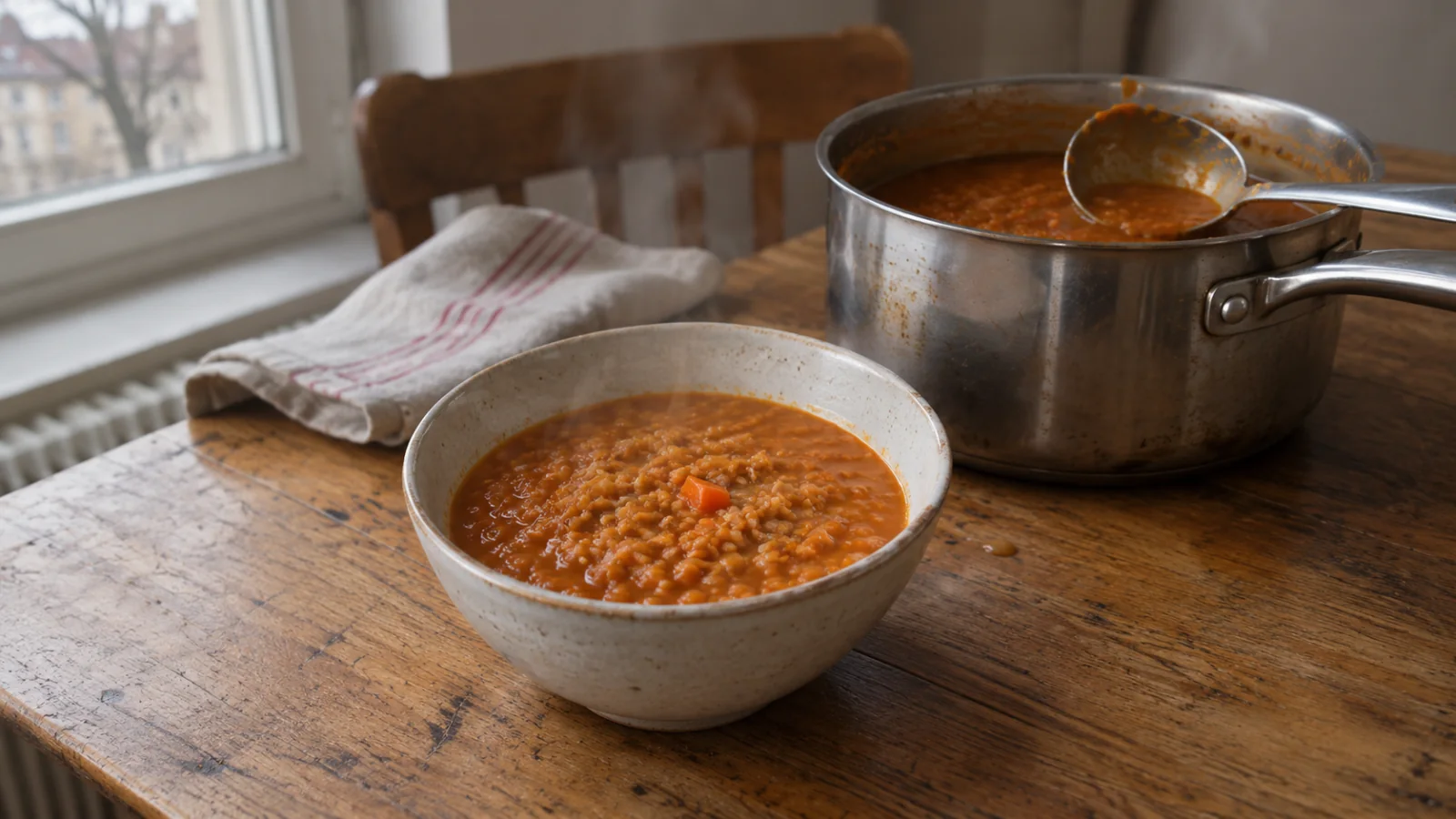
A pot of red lentil soup might fill two bowls at supper and a flask for lunch the next day. The flask holds less than either bowl. To log one serving of a homemade recipe, divide the amount you ate by the total cooked yield. That gives you a share of the pot even when everyone uses different crockery.
Work out what went into your bowl
Suppose the finished soup weighs 1,200 g and your bowl holds 300 g of it. Divide 300 by 1,200 and you get one quarter. If you have already estimated the energy of the entire recipe from its ingredients, multiply that estimate by a quarter. For a pot estimated at 960 kcal, the bowl comes to about 240 kcal. Those are figures for the calculation. Your own ingredients and quantities set the estimate for your soup.
Use the weight of the finished soup in both parts of the calculation. Dry lentils take up water, and some liquid cooks off. If you weigh everything, set the scale to zero with the empty serving jug or bowl on it before adding any soup. Keep a slice of rye bread, a spoonful of crème fraîche or anything else added at the table separate from the pot total.
A ladle works for lunch boxes too
Give the soup a stir and use the same ladle for each bowl and flask. Say the whole pot yields eight roughly level ladles. A flask holding two ladles gets about a quarter of the batch. Count what is left in the saucepan as well. Two ladles out of the six served so far would overstate your share if another two are still on the hob.
This estimate works well for a blended soup. For a chunky stew, a ladle full of potatoes and lentils can differ quite a bit from one that is mostly broth. If the bowls look different, check what is actually in yours before applying a fraction of the recipe to it.
Save the serving you ate in Nourri
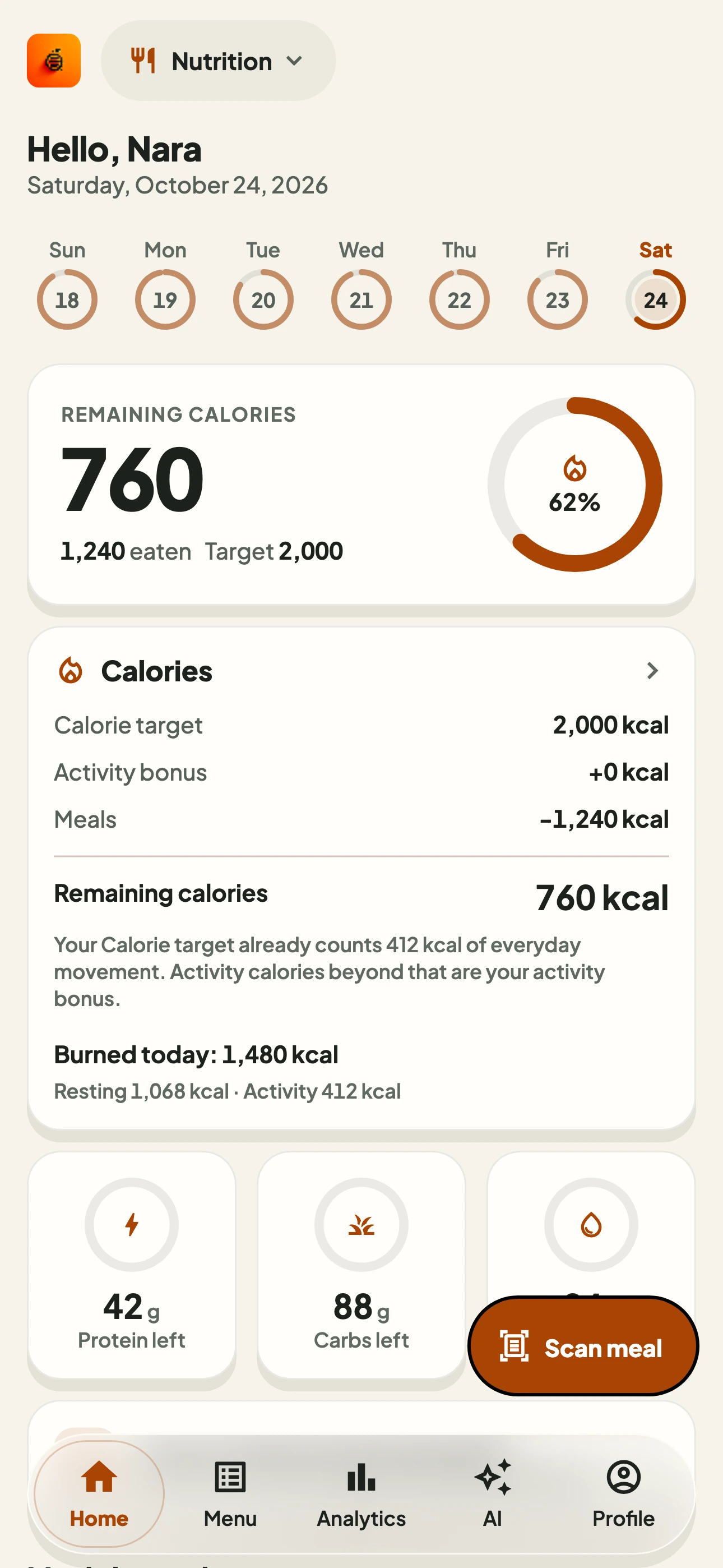
In Nourri Nutrition, scan your own bowl and review the food and portion shown. Check what 1× already represents. If the estimate describes the bowl in your photo and you ate it all, leave that portion at 1×. Applying a quarter again would record only a quarter of your bowl. The recipe calculation and the bowl scan are two ways of estimating the same lunch. Save one entry for it.
If you leave roughly half of that bowl, adjust the portion while reviewing it. Once saved, you can open the meal again to correct its portion. Nourri explains how this works in its guide to adjusting a saved meal.
Tomorrow’s flask can wait until tomorrow’s lunch. You might pour the whole thing into a mug at work, share some with a friend, or buy a bread roll on the way in. Record the lunch you end up eating.